
Social proof in
e-commerce
Building the trust that turns browsing into buying.
Role:
Lead Designer
Timeline:
6 months
Company:
Ocado - ecommerce platform
Project context
Social proof is a powerful behavioural principle where people rely on the actions and opinions of others to guide their decisions, particularly in uncertain situations.
In grocery shopping, this often influences decisions like: choosing a wine for dinner, trying new ingredient or selecting unfamiliar brands.
When it comes to food shopping, around 70% of products in baskets are previously bought items. While this makes basket building efficient, it significantly limits new product discovery.
Social proof features already in platform
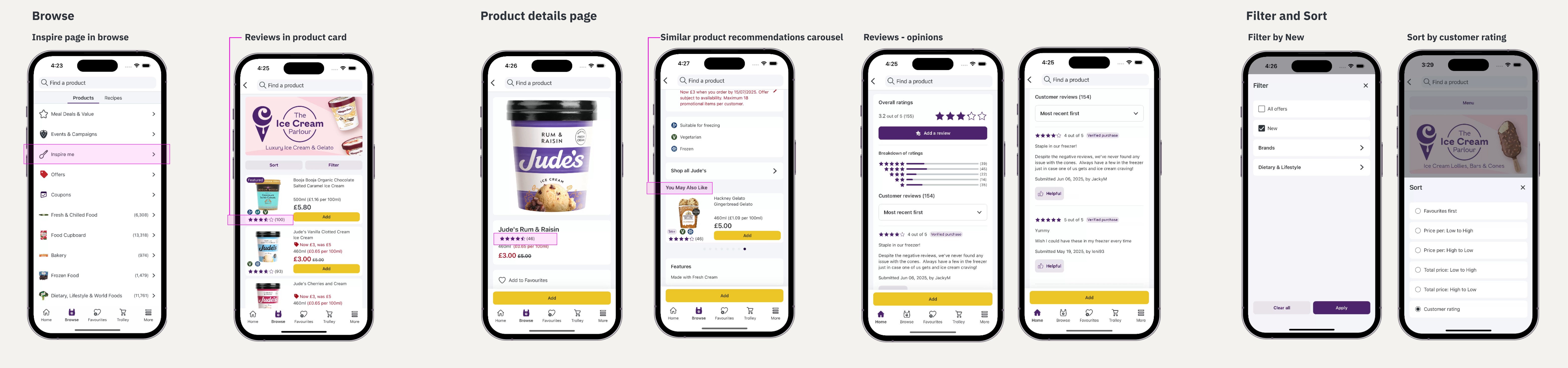
Despite the e-commerce platform already offering some social proof features, new product discovery and purchase remained low.
Problem to solve
In online grocery shopping, around 70% of products in baskets consist of previously bought items. Users tend to stick to familiar products, which limits new product discovery. This is a challenge for both Ocado and its supermaket partners, who are eager to showcase new products to a wider audience.
Data
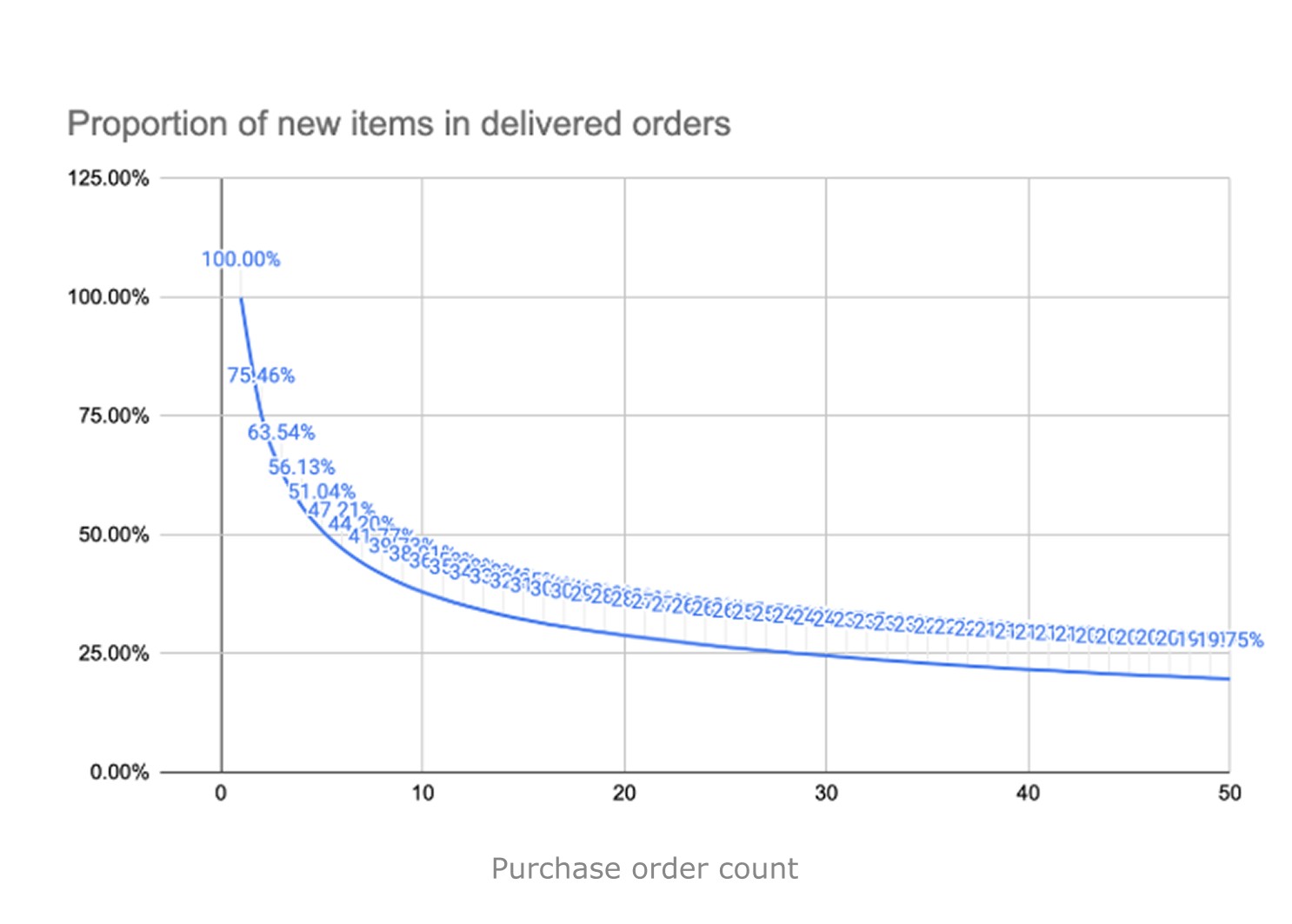
The rate of new items added to baskets declines over time and eventually becomes stagnant.
Ocado’s platform is highly optimised for efficient basket building, making it very easy for customers to find and add previously purchased products. While this improves convenience, it also reinforces habitual purchasing behaviour and limits product discovery.
Several existing features contribute to this pattern: Repeat Last Order, Favourites pages and Recurring Orders
These capabilities help users quickly rebuild their usual shop, but they also reduce opportunities for customers to explore and try new products.
Define opportunities
After gathering data, past research insights and benchmarking social proof mechanisms in digital products.
The PM and I framed the opportunities:
- Introduce new social proof mechanisms to help build trust
- Make social proof visible & prominent in the shopping journey
We then organised a kickoff workshop with a multidisciplinary team including Product, Design, Data Science, and Engineering.
Alignment and ideation
I facilitated a workshop session with the team, involving the Product Manager, another Product Designer, Data science and Developers. During the workshop, we aligned our understanding of the project goal, discussed social proof mechanisms I collected in a benchmarking presentation and engaged the team in ideation exercises to generate multiple solutions. We then discussed the feasibility of these solutions and the scope of the project.


Social proof mechanisms benchmark presentation I shared with the team. It helped to inspire the team on how other products solve the trust and discoverability opportunity.
Hypotheses
The team and I aligned on these hypothesis and with the PM we defined some success metrics.
What was implemented?
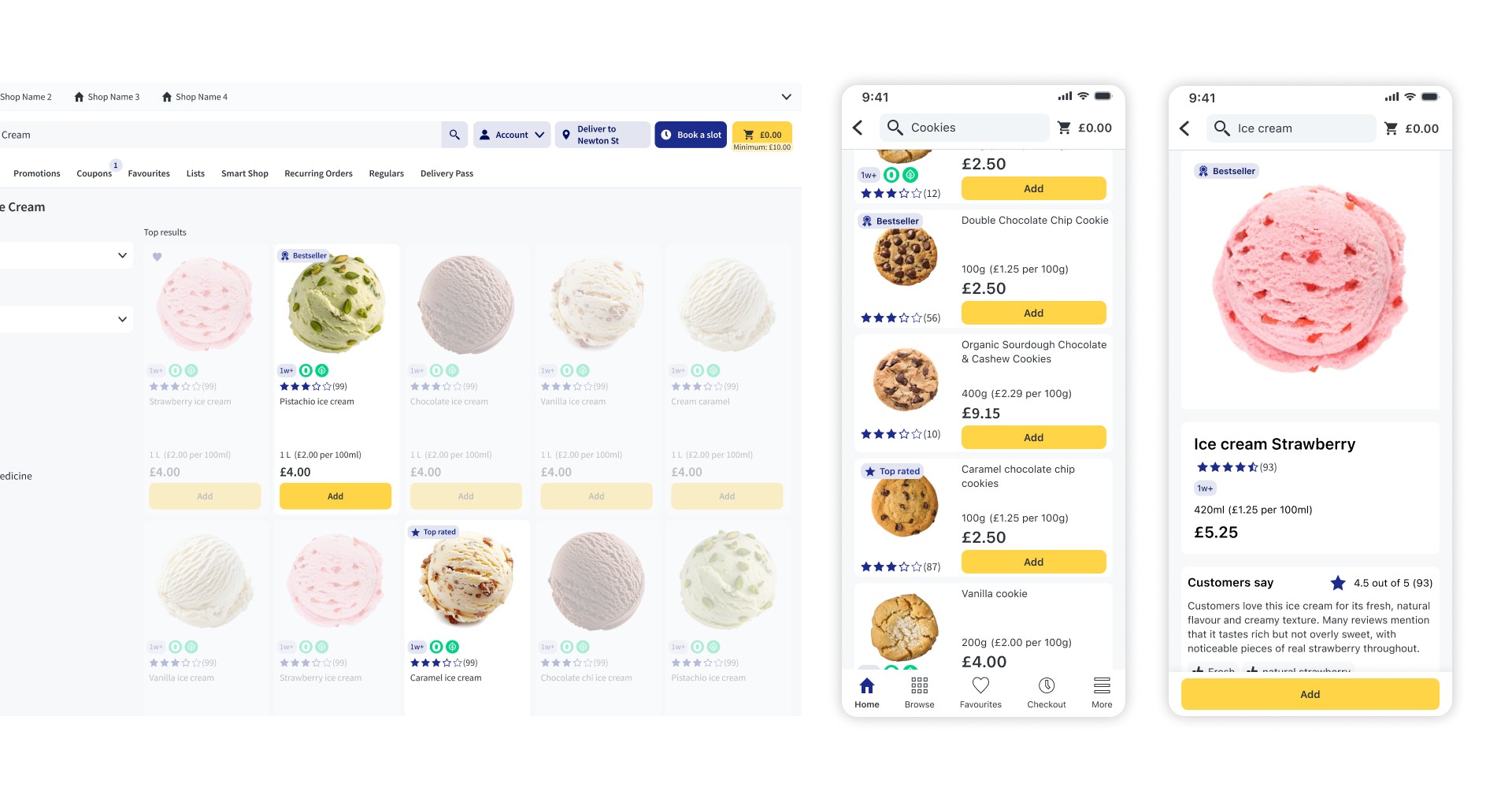
Dynamic product badges
Dynamic badges are used to highlight items based on social attributes that enhance product discovery and trust to try new items.
They draw attention to special attributes, making it easy for users to scan the product grid and select an item.
This works as a powerful form of social proof because it surfaces the collective opinion of other shoppers in a clear and digestible format. These helped customers quickly evaluate new products products with greater confidence.
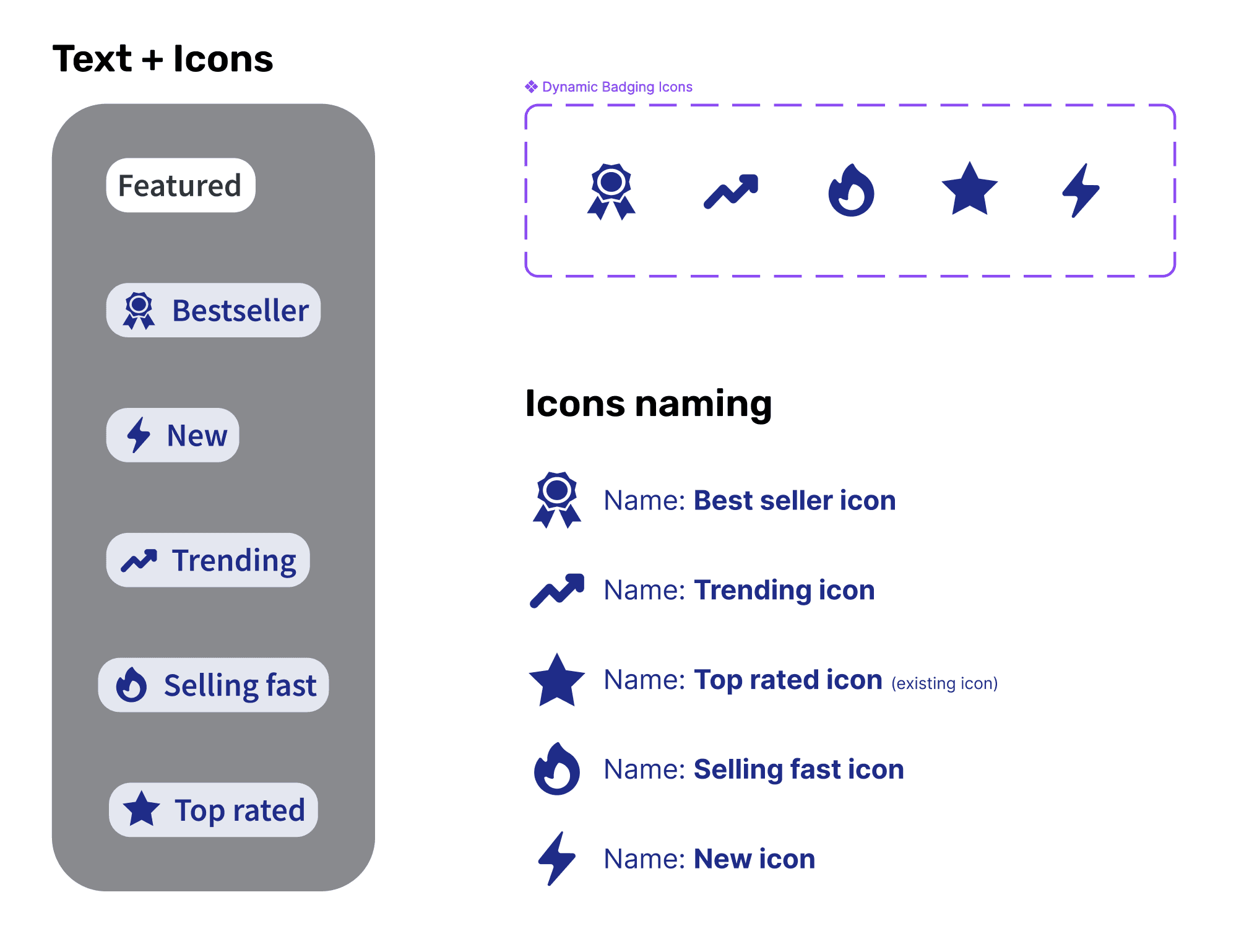
Attributes for dynamic bags - logic tree

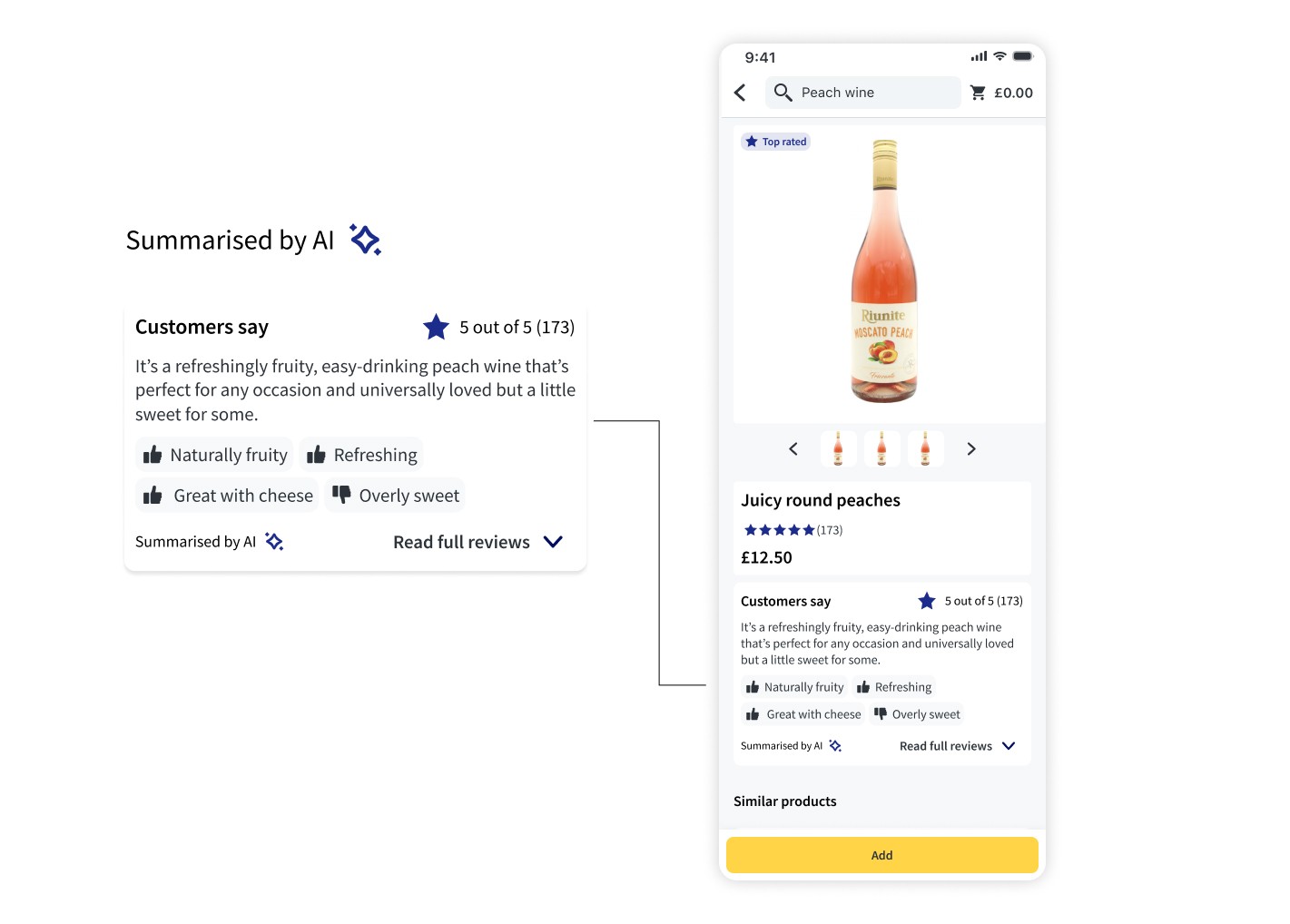
Reviews summarised by AI
Introduced concise AI-generated summaries that synthesize key insights from large volumes of customer reviews. Instead of requiring shoppers to read dozens of individual comments, the system performs sentiment analysis to highlight the most common positive and negative themes about a product.
This works as a powerful form of social proof because it surfaces the collective opinion of other shoppers in a clear and digestible format.
These helped customers quickly evaluate new products products with greater confidence.
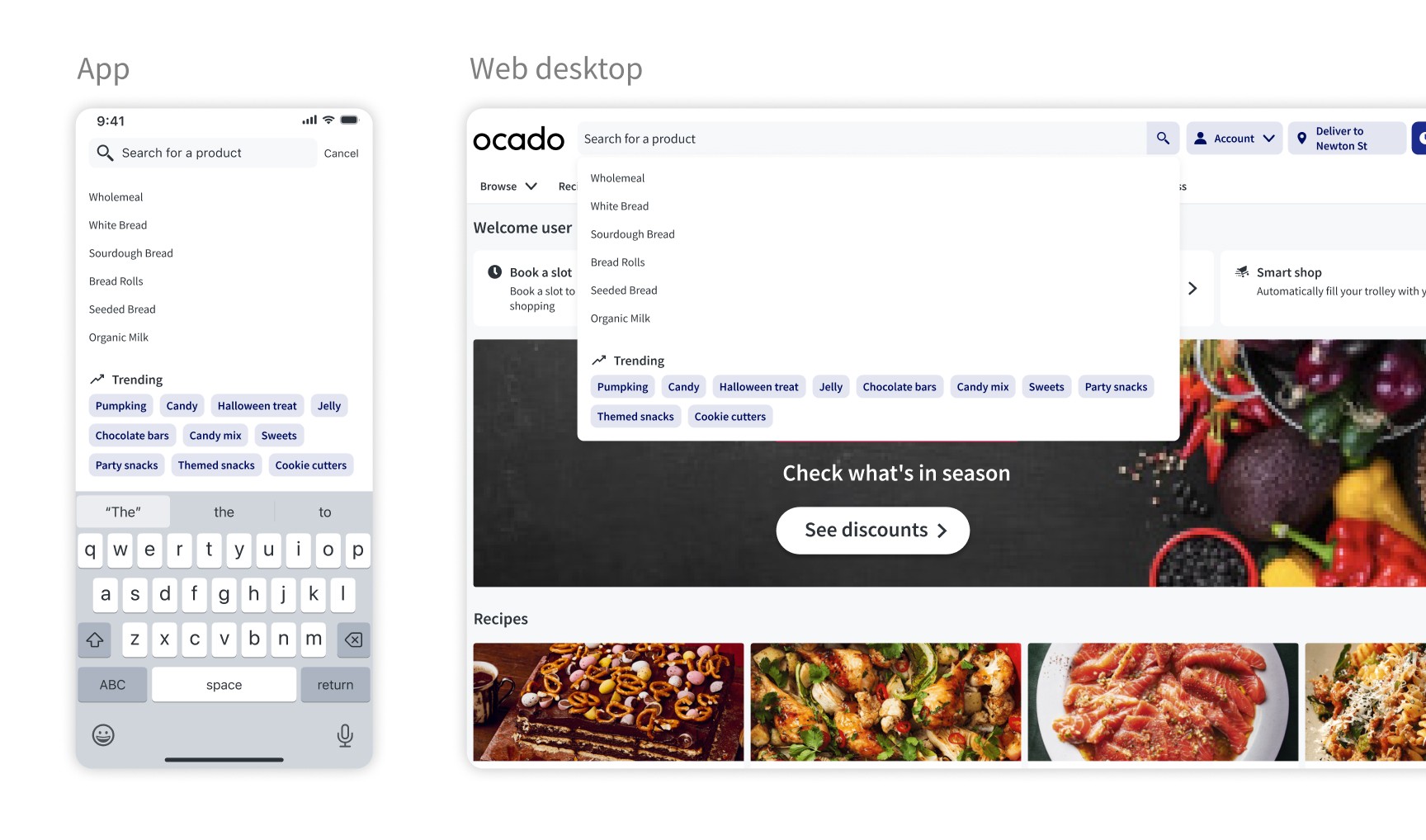
Trending searches
Surfaces popular queries in search results to guide discovery.
The introduction of social proof features helped surface new products in moments where customers were making decisions. By highlighting what other shoppers were buying, rating highly, or searching for, we were able to increase visibility and trust around unfamiliar products without disrupting the existing shopping flow.
Testing
Multiple design variations were tested using Optimizely across search and product listing pages.
Key metrics included:
add-to-basket conversion
new product adoption
click-through rates on discovery surfaces
Results and impact
increase in new product additions
to baskets
higher click-through on product cards featuring social proof badges
uplift in add-to-basket for products
with AI review summaries
The capabilities were released as a scalable platform feature, enabling retailers to control which social proof mechanisms appear across their stores through feature flags.
Project done in collaboration with designers Luke Hadley and Joseph Toumazos.
