
King.com projects
During my 7.5 years at King.com, I worked at the crossroads of marketing and product development. I developed projects for game launches and strategic marketing campaigns, collaborating seamlessly with teams in game studios, creative studio, and marketing.
Company:
King.com
Improving Events engagement in Candy Crush
I contributed to projects designed to elevate player engagement and loyalty. One initiative centered on optimising the engageent of game missions and events.
Challenge
In Candy Crush, users can play additional mini-quests and events beyond the regular game progression (game levels). The goal of this initiative was to increase engagement in live events and delight users seeking continuous enjoyment, even when out of game lives, or exploring side events to make the experience more dynamic.
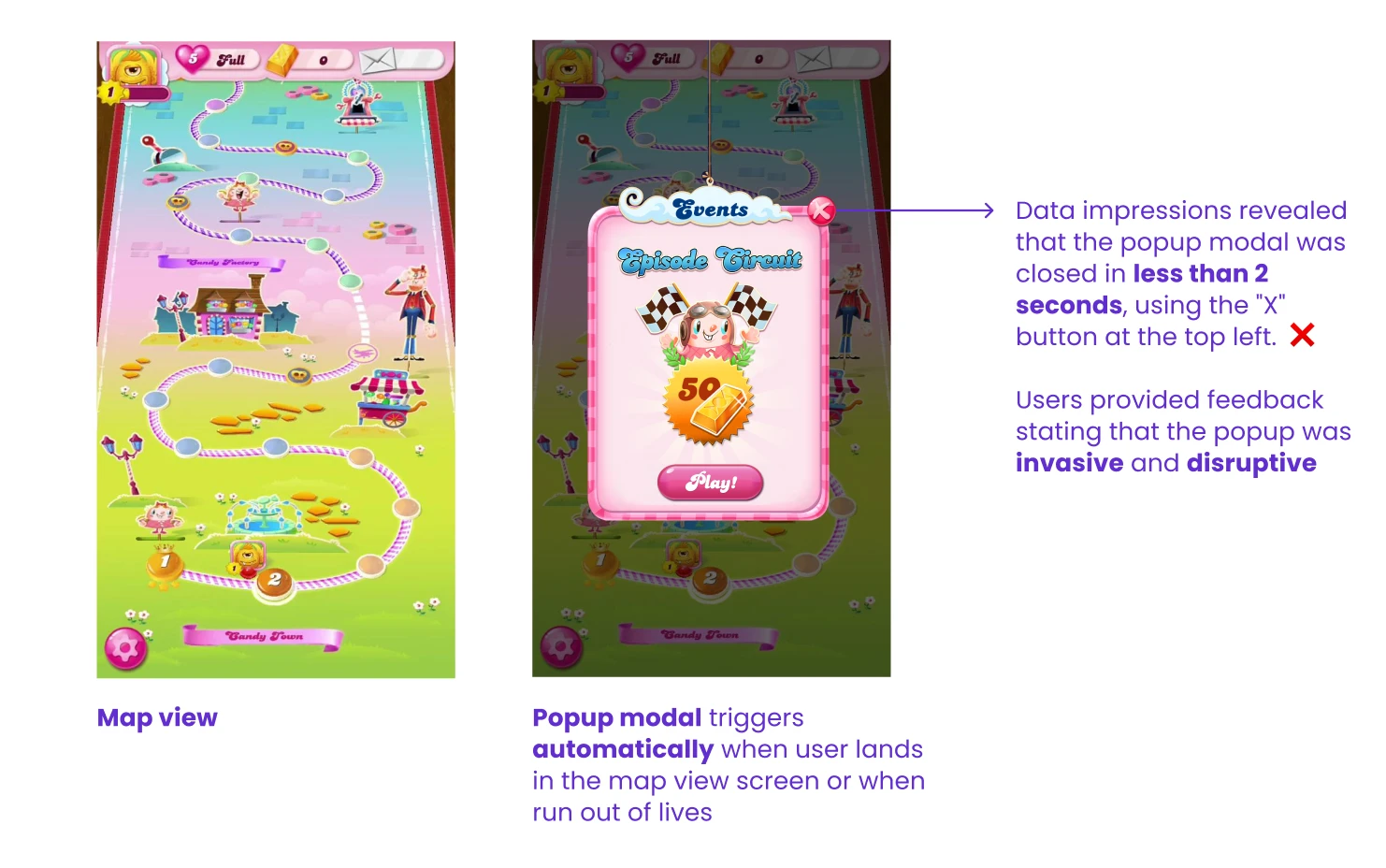
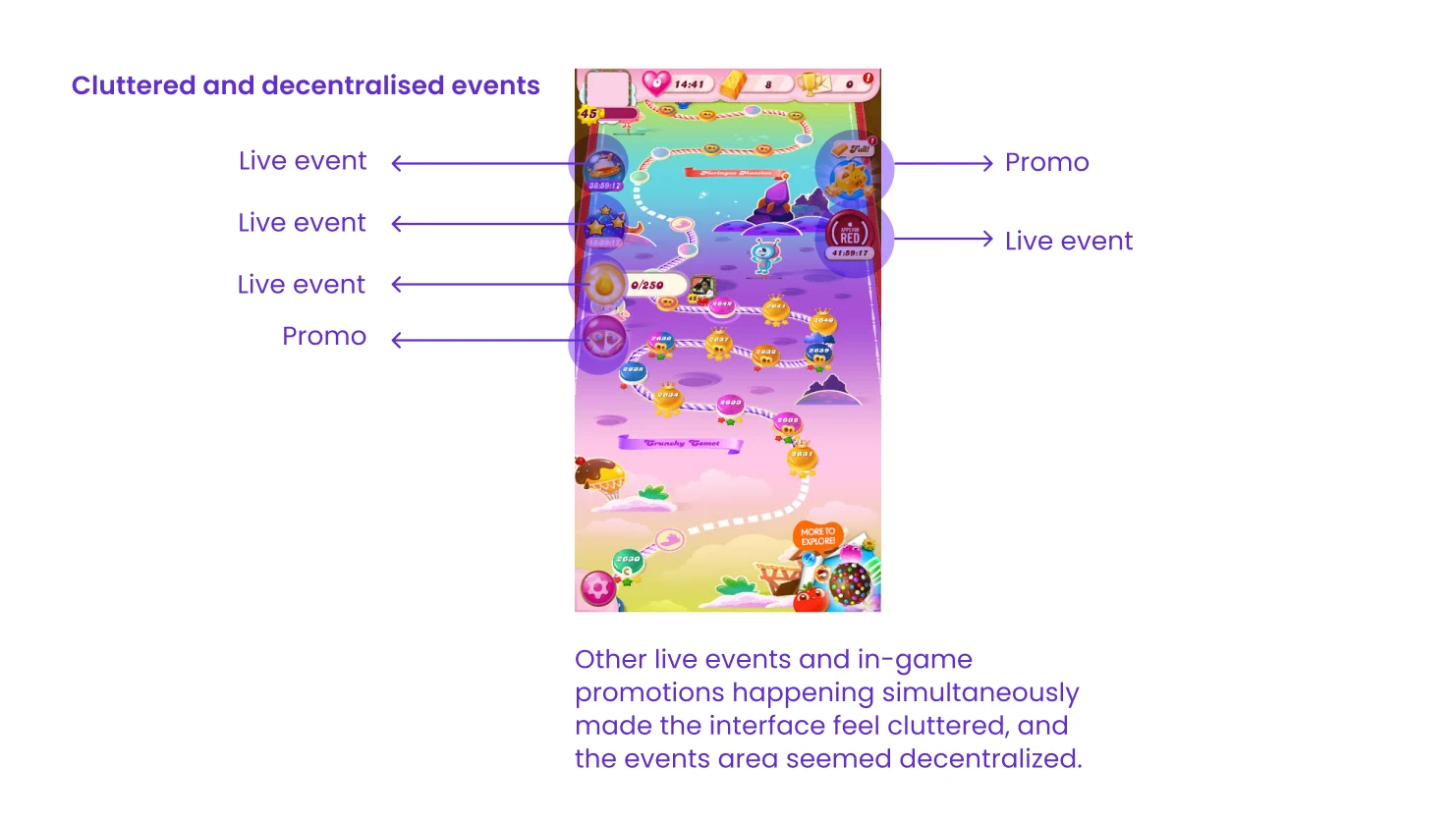
While observing the Live events forum on the King community website, I noticed excitement and player retention regarding Events. However, data suggested a need for improved engagement. I mapped the primary entry point for live events and identified that the main entry was through a popup triggered before entering the game map view and after running out of lives. Data showed a potential issue in impressions: most users closed the popup within 2 seconds, indicating a lack of attention to the information.
What are game Events and how do they work?
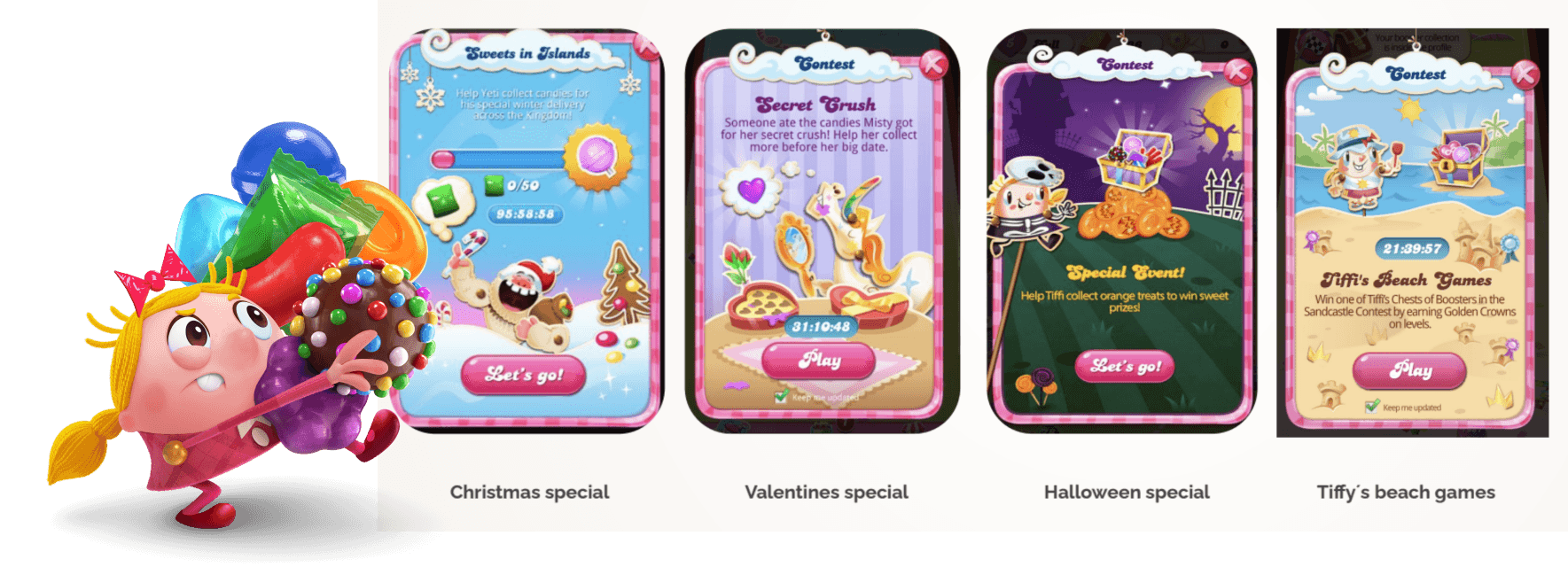
Events are special quests and mini-games beyond the regular game levels. They typically appear in the game through a pop-up modal when players land on the map view or after running out of lives.
Events general rules:
Time limited events / Seasonal events
Duration is 1-7 days – length varies
Players complete an amount of in-game tasks
Successful participants receive a reward
Rewards: Gold bars, booster and game specific tokens
Feedback from players
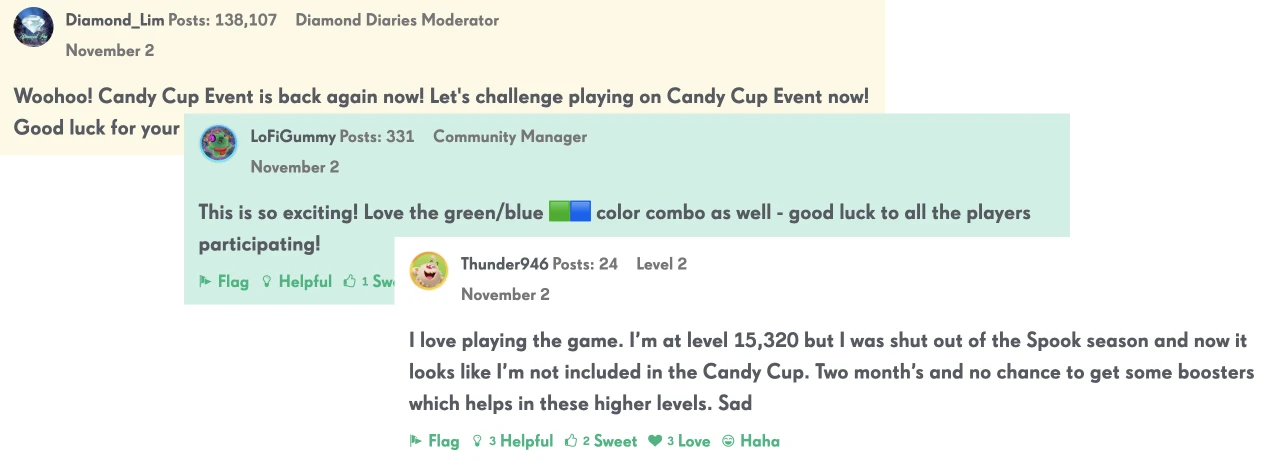
Feedback from players found in the player forum community of King’s website revealed excitement and provided insights that Events was a great feature to improve player retention. However, data indicated a need for enhanced engagement. A survey was conducted among players participating in live events, and the feedback highlighted that players perceived the popup as intrusive and disruptive to the game flow, negatively impacting their overall experience.
Discovery and mapping of current entry points
I facilitated a workshop session with the team, involving the Product Manager, another Product Designer, Data science and Developers. During the workshop, we aligned our understanding of the project goal, discussed social proof mechanisms I collected in a benchmarking presentation and engaged the team in ideation exercises to generate multiple solutions. We then discussed the feasibility of these solutions and the scope of the project.
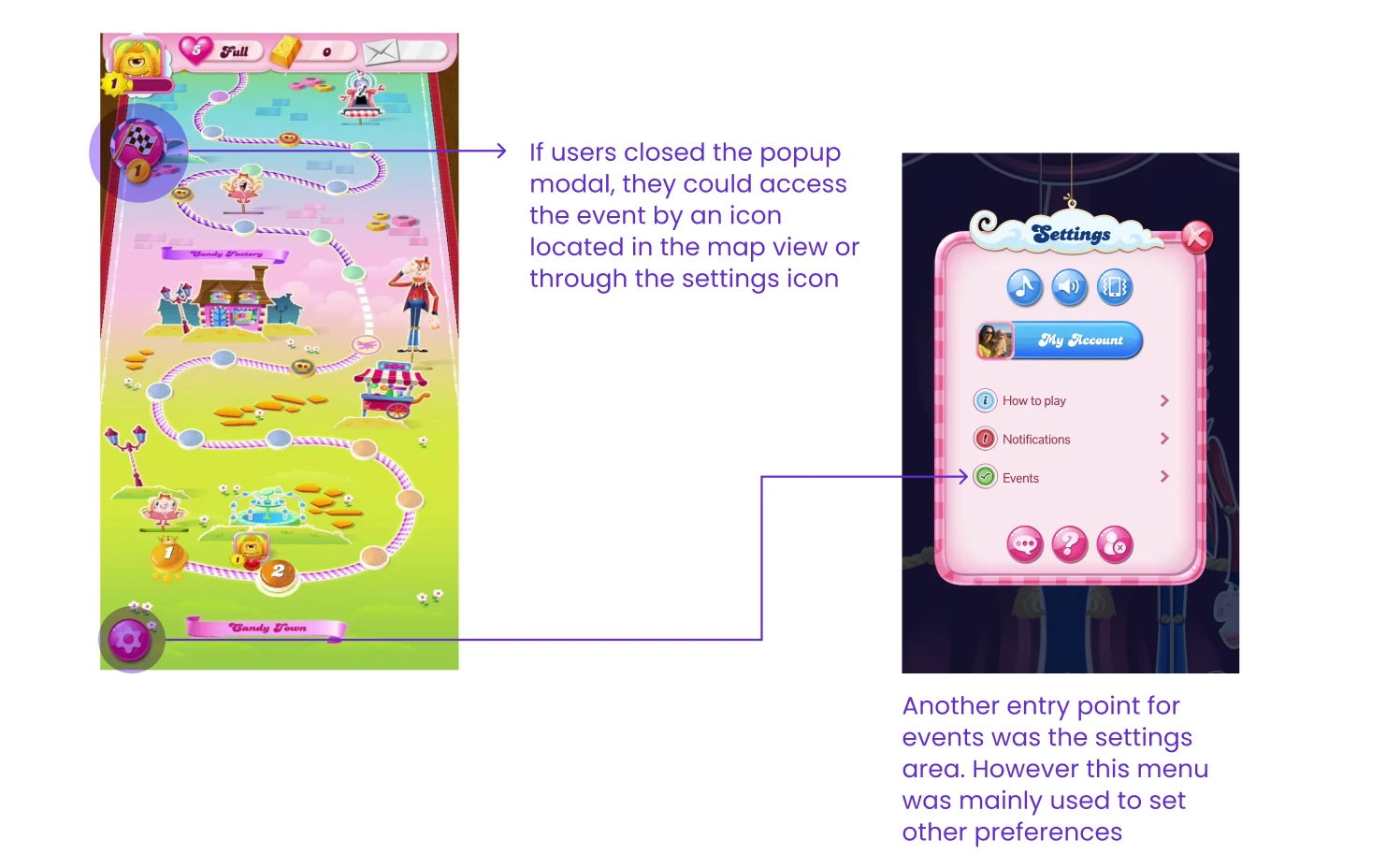
Events user cycle and planning
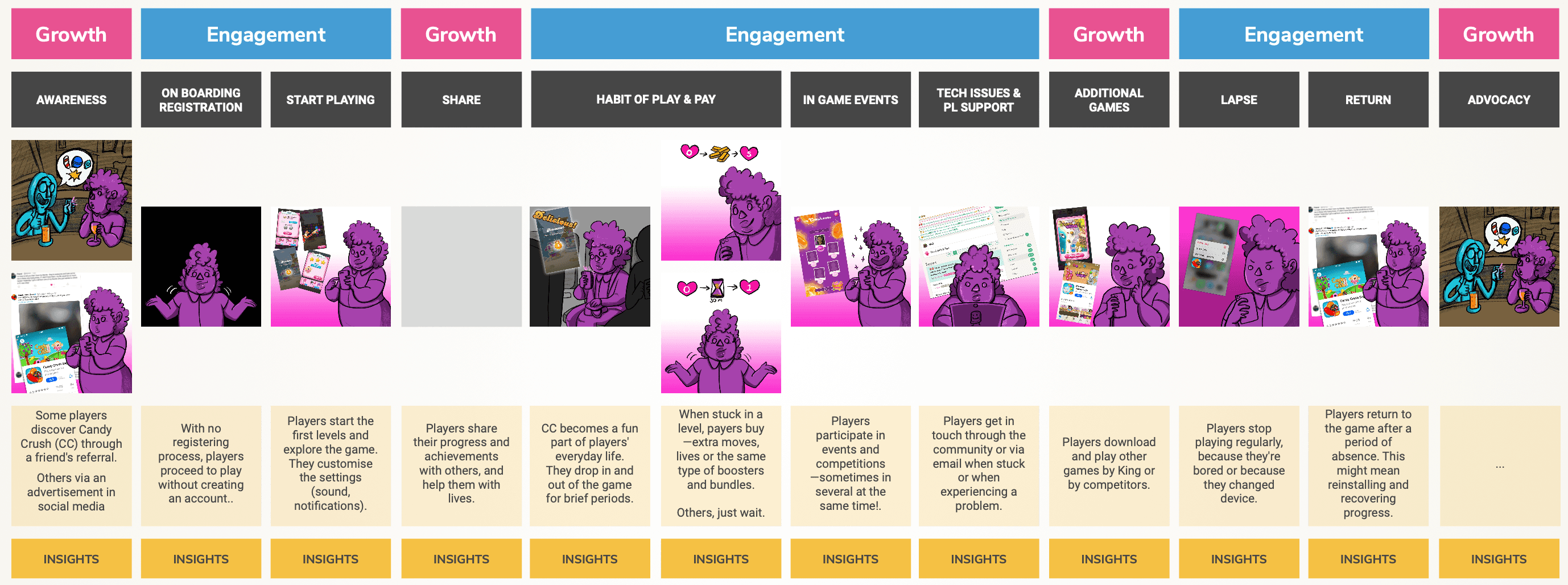
After mapping the Events entry points and the user jorney, we could come up with a hypothesis to validate through an A/B test. We wanted to make the Events entry point more prominent to give users the control of when in the player journey they wanted to access the Event.
Testing
Hypothesis to be validated with test:
Through an A/B test focused on strategic placement, incorporating prominent entry points for key features in the user interface within the bottom navigation, we anticipate a measurable increase in user engagement. This strategic placement aims to enhance user visibility and accessibility to key features, granting users control over when they want to access and participate in the event.
Solution
Strategic placement: Incorporate prominent entry points for key features in the user interface in the bottom navigation
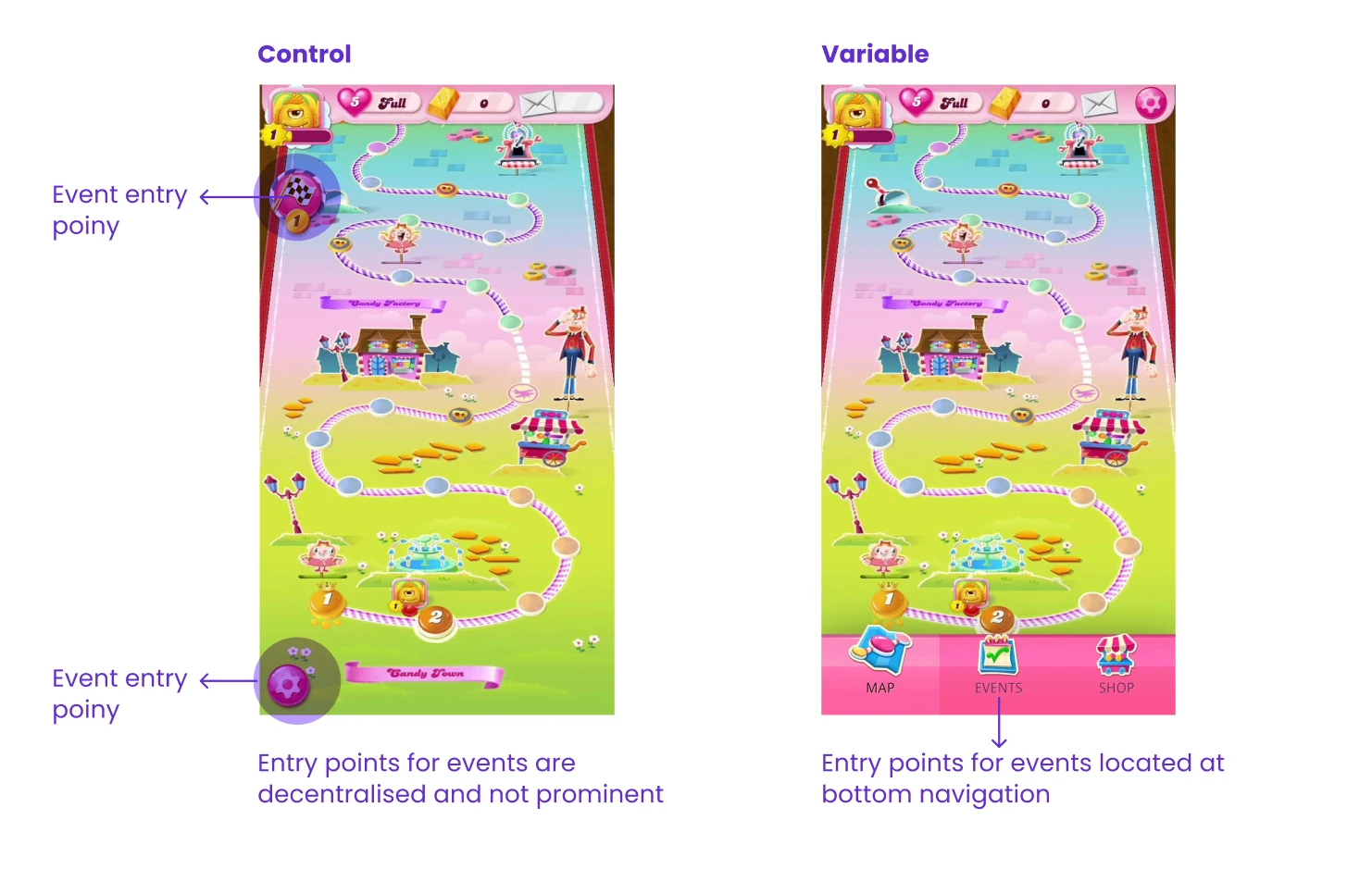
Conclusion
The successful implementation of a redesigned entry point resulted in a notable increase in engagement with live events. This approach not only addressed user feedback but also enhanced the overall user experience by streamlining navigation and minimizing disruptions. The key takeaway is the importance of continuously testing and refining design elements to align with both business objectives and user preferences. With this approach we made sure to grant users control to how and when they want to participate on game Events.
Results and impact
A/B test on 20% of the user base
(2 weeks)
Test achieved a 4.8% increase in engagement
with live events
Improved Accessibility: Enabled players to check progress and mechanics of live events at any time.
Enhanced UI Clarity: Established clear separation between features, offers, and events in the user interface.
Simplified Navigation: Reduced the number of places live events were situated, allowing players to easily discover ongoing events.
